
The agency landscape is in constant flux, demanding increased efficiency and output without compromising quality. In 2027, the pressure to deliver stunning, high-performing websites at an accelerated pace is greater than ever.
For agencies that rely on WordPress and Elementor, unlocking new levels of productivity is key to staying competitive. This means re-evaluating existing workflows and embracing tools that can truly revolutionize the website creation pipeline.
Streamlining Your Agency’s Website Creation Pipeline
The traditional agency workflow for website creation, while foundational, often involves numerous manual steps that can become significant time sinks. These can include everything from initial client onboarding and discovery to the final deployment. Identifying these friction points is the first step toward optimization. Common bottlenecks include lengthy design revisions, repetitive coding tasks, and integration issues between different tools or platforms. A lack of standardized processes across projects can also lead to inconsistencies and delays. For instance, a project might stall if a key designer or developer is unavailable, or if there’s a misunderstanding about project scope, which can easily happen without a robust project management system.
By meticulously mapping out your current processes, from the moment a client signs on to the final handover, you can pinpoint where time is being lost. Is it in the handover from design to development? Is it in the implementation of specific functionalities? Is it in the back-and-forth of client feedback? Understanding these specific pain points allows for targeted solutions. For example, if client feedback loops are consistently causing delays, implementing a more structured feedback and approval process, perhaps using a dedicated platform or more frequent, concise check-ins, can make a significant difference. The goal is to create a more fluid, predictable, and efficient system that minimizes wasted effort and maximizes team output.
Identifying Bottlenecks in Traditional Agency Workflows
Traditional agency workflows often suffer from a linear, sequential approach that can create significant lag. Think of a project moving from initial client brief to wireframing, then to full design mockups, followed by front-end development, back-end integration, content population, and finally QA and launch. Each stage can be a potential point of delay if handoffs are not seamless or if feedback cycles are extended. For example, a common bottleneck is the transition from design to development. If designs are not provided in a developer-friendly format or lack detailed specifications, developers may spend considerable time deciphering them or making assumptions, leading to rework. Furthermore, a lack of modular design thinking means that even small changes late in the process can require extensive rework across multiple project components.
Another pervasive issue is the reliance on custom coding for every unique element. While this allows for unparalleled customization, it’s incredibly time-consuming and expensive. Agencies often find themselves rebuilding similar functionalities—like custom forms, animated hero sections, or intricate navigation menus—for each new project. This repetitive effort eats into billable hours and slows down project delivery. Without a system for reusing established components or frameworks, the agency is perpetually starting from scratch, impacting both profitability and the ability to take on more clients. Recognizing these inherent inefficiencies is crucial for making informed decisions about workflow enhancements and tool adoption.
The Evolution of Web Development Demands: What Agencies Need by 2027
By 2027, the demands placed on web development agencies have evolved significantly, pushing beyond simple website creation to encompass sophisticated digital experiences. Clients expect not only aesthetically pleasing and user-friendly websites but also those that are highly performant, secure, and optimized for search engines. The rise of AI in content creation and user interaction means agencies must be adept at integrating these technologies. Furthermore, the expectation for rapid iteration and deployment is a constant. Clients in 2027 want to see functional prototypes quickly and be able to adapt their online presence in near real-time to market shifts. This necessitates a workflow that is agile and responsive, moving away from rigid, long-term project plans towards more flexible, component-based development.
Agencies need tools that facilitate this agility. This means moving beyond basic template libraries to embrace comprehensive component systems that allow for deep customization and rapid assembly of unique interfaces. The ability to manage and deploy multiple client sites efficiently from a central hub, while also ensuring consistent branding and functionality across them, is becoming paramount. Finally, there’s an increasing emphasis on data-driven design and optimization. Agencies must be equipped to build websites that are not only visually appealing but also generate measurable results, requiring seamless integration with analytics and A/B testing tools. The pressure is on to deliver sites that contribute directly to a client’s business objectives.
Leveraging Pre-built Components for Rapid Prototyping
The power of pre-built components lies in their ability to drastically accelerate the initial stages of website creation, particularly prototyping. Instead of spending days or weeks coding basic elements from scratch, designers and developers can assemble functional mockups in hours. This allows for a much faster turnaround when presenting initial concepts to clients. For instance, a designer can quickly drag and drop pre-designed header sections, call-to-action blocks, and footer layouts to create a visual representation of the proposed website structure. This not only speeds up the design process but also provides clients with a tangible preview, fostering clearer communication and reducing the likelihood of misinterpretations later on.
Furthermore, using pre-built components encourages a modular approach to design and development. Each component is typically built with best practices in mind, ensuring responsiveness, accessibility, and often, performance optimization. When agencies adopt a library of these components, they are essentially building with a foundation of tested, high-quality elements. This means that even complex layouts can be constructed by combining and slightly modifying these existing blocks, rather than reinventing the wheel. This approach significantly reduces the time spent on repetitive tasks and allows teams to focus on the unique aspects of a client’s project, such as custom branding, specific content strategy, or unique functional requirements. For a more in-depth look at how these components contribute to speed, exploring resources on speedy site design with ready components can be highly beneficial.
Beyond Basic Templates: The Power of an Expansive UI Component Library
In the dynamic digital landscape of 2027, relying solely on basic website templates is akin to building a skyscraper with pre-fabricated walls and expecting architectural acclaim. True differentiation and competitive advantage stem from the ability to craft unique, engaging user experiences. This is where an expansive UI component library becomes indispensable for agencies. It offers a vast palette of meticulously designed, functional building blocks—from intricate navigation menus and interactive sliders to sophisticated forms and testimonial carousels. These are not merely aesthetic additions; they are pre-coded functionalities that ensure consistency, responsiveness, and often, performance optimization, freeing up valuable developer time to focus on more complex problem-solving and client-specific customization.
The sheer volume and diversity within a comprehensive library empower designers and developers to break free from repetitive design patterns. Instead of being constrained by the limitations of a handful of templates, an agency can tap into thousands of components to create truly bespoke websites that perfectly align with a client’s brand identity and user engagement goals. This allows for a much more nuanced approach to website development, where each section can be tailored to serve a specific purpose, whether it’s driving conversions, enhancing user navigation, or showcasing content effectively. The ability to mix, match, and customize these components means that even similar projects can result in visually distinct and functionally superior final products.
Why 4000+ Components Matter for Design Versatility
The number of components in a library directly correlates to an agency’s capacity for creative exploration and rapid development. A library boasting over 4000 distinct UI components offers an unparalleled level of design versatility. This sheer volume means that for virtually any design requirement—whether it’s a contemporary hero banner with parallax scrolling, a data-rich pricing table, or an elegantly animated call-to-action—there’s likely a pre-built solution available. This extensive selection dramatically reduces the need for custom coding for common interface elements, saving significant time and resources. For example, building a series of unique testimonial sliders for different client projects could previously take days of development. With a large component library, this can be reduced to a matter of minutes, involving selecting the desired style, inputting client content, and making minor stylistic adjustments.
This extensive range also fosters innovation. When designers and developers have a vast array of pre-designed, high-quality elements at their fingertips, they are more likely to experiment with novel layouts and interactive features. This leads to more engaging and memorable website experiences for end-users. Moreover, a large library typically encompasses components designed for various purposes and industries, ensuring that agencies can meet diverse client needs effectively. This breadth of options means that the agency is less likely to be constrained by the “out-of-the-box” feel of templates, enabling them to deliver truly customized and differentiated web solutions that stand out in a crowded digital marketplace. Embracing such a rich resource is key to maintaining a competitive edge.
Categorizing and Utilizing Components for Specific Project Needs
The true power of an extensive UI component library is unlocked through effective categorization and strategic utilization. Simply having thousands of components is ineffective if they cannot be easily found and implemented. A well-organized library, often categorized by element type (headers, footers, forms, galleries, CTAs) and by industry or function, allows teams to quickly navigate and select appropriate building blocks. For instance, when starting a new e-commerce site, a developer can immediately access categories like “Product Grids,” “Add to Cart Buttons,” and “Customer Reviews” to build out the core functionality. This streamlines the assembly process significantly.
Beyond basic categorization, agencies should develop internal best practices for utilizing components. This might involve creating “starter kits” for common project types or establishing guidelines for when to use a pre-built component versus when to build custom. For example, if a client requires a highly specific interactive feature not readily available, the team can leverage their understanding of component architecture to build a custom solution that still adheres to the library’s design principles, ensuring consistency. This methodical approach ensures that the library is not just a collection of assets but a systematic way to deliver consistent quality and accelerate development. Properly integrating these into your workflow can lead to substantial improvements, as discussed in guides on building faster WordPress websites with components.
Examples: Building Unique Header Styles with Pre-designed Blocks
Creating distinct and engaging header sections is crucial for setting the tone of a website, and with a robust component library, agencies can achieve this rapidly and with exceptional variety. Consider a scenario where an agency needs to design three different headers for three distinct client projects: a modern tech startup, a luxury travel agency, and a local bakery. Instead of designing each from scratch, the team can pull from a library of pre-designed header blocks.
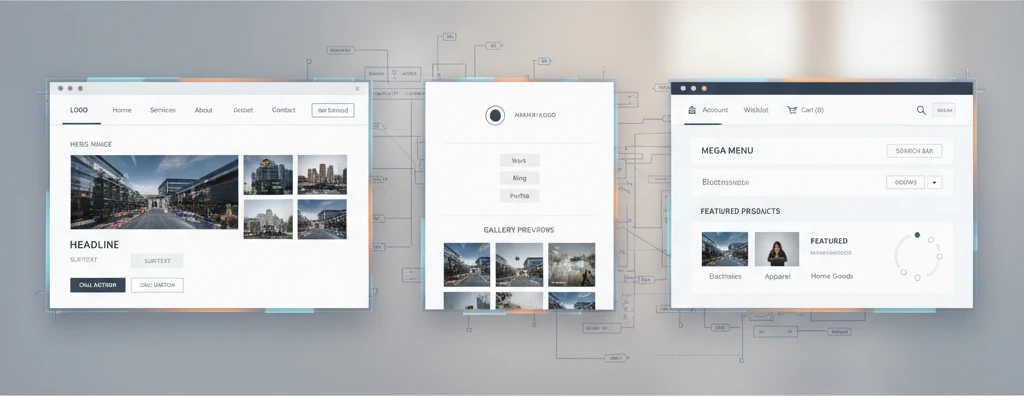
For the tech startup, they might select a header featuring a clean, minimalist layout with a prominent logo, a sleek navigation menu, and a subtle animated background. For the travel agency, they could opt for a full-width header with a stunning background image, an overlayed headline, and a clear call-to-action button for booking. For the bakery, a warmer, more approachable header might be chosen, perhaps incorporating a stylized logo, simple navigation, and a “View Menu” button. Each of these distinct styles can be achieved by selecting a base pre-designed block and then making minor adjustments to colors, typography, and imagery to perfectly match the client’s brand. This accelerates the design phase while ensuring each header feels unique and on-brand.
Accelerating Elementor Development Cycles with CopyElement
For agencies leveraging the power of Elementor, the challenge often lies in balancing its visual design flexibility with the need for speed and efficiency. CopyElement addresses this directly by providing a massive library of ready-to-use UI components and templates that integrate seamlessly with Elementor. This means that instead of painstakingly crafting each section, widget, and element from scratch within Elementor, agencies can simply drag and drop these pre-designed, optimized blocks. This drastically cuts down on the repetitive tasks involved in web development, allowing teams to focus on higher-value activities like strategic planning, content integration, and client communication. The result is a significantly shortened development lifecycle, enabling agencies to take on more projects and deliver them faster.
The impact of such a tool extends beyond just saving development time. It also enhances the quality and consistency of the websites produced. Since CopyElement components are designed with modern web standards and best practices in mind—including responsiveness, accessibility, and performance—agencies can be confident that they are building robust websites. This reduces the likelihood of encountering technical issues down the line and minimizes the need for extensive debugging. By providing a curated collection of high-quality assets, CopyElement empowers agencies to elevate their Elementor development processes, transforming what might have been weeks of work into days, and ultimately, improving client satisfaction and profitability.
Reducing Development Time from Weeks to Days
The most significant advantage CopyElement offers agencies is its ability to compress development timelines dramatically. Traditionally, building a custom website within Elementor, even with its user-friendly interface, can involve days of work per client site. This includes setting up layouts, styling individual widgets, ensuring responsiveness across devices, and implementing interactive elements. CopyElement disrupts this by providing thousands of pre-built, professionally designed sections and widgets that can be implemented with a simple drag-and-drop action. For instance, creating a complex hero section with layered elements and animations could previously take several hours of meticulous setup. With CopyElement, this exact or a similar, highly customizable section can be added in minutes.
This acceleration is not just about saving time; it’s about optimizing agency resources. When development tasks that once took days can be accomplished in hours, teams are freed up to handle more client projects concurrently or dedicate more time to critical aspects like user experience design, content strategy, and SEO integration. For example, an agency previously capable of completing two complex websites per month might, with CopyElement, be able to deliver four or even five. This boosts overall productivity and revenue potential, making it a crucial tool for agencies aiming to scale their operations and meet the increasing demand for high-quality websites delivered on tight schedules. Discover more about how to build responsive sites and save hours by leveraging such resources.
Minimizing Client Revisions Through Faster Mockups
One of the most time-consuming and often frustrating aspects of agency work is the client revision cycle. Misunderstandings about design direction or functionality can lead to multiple rounds of changes, eating into billable hours and delaying project completion. CopyElement significantly mitigates this by enabling agencies to produce high-fidelity, interactive mockups much earlier in the process. Instead of presenting static wireframes or low-fidelity designs, agencies can use CopyElement’s pre-built components to assemble visually complete sections and pages that closely resemble the final product. This allows clients to see exactly what they are getting, reducing ambiguity and fostering more informed feedback.
By presenting a more concrete representation of the final website early on, clients can better visualize the end result and provide more precise, constructive feedback. For example, if a client can interact with a pre-built navigation menu or see how a dynamic content block functions, their feedback will likely be more specific than if they were looking at a flat image. This clarity of vision leads to fewer, more targeted revisions. Consequently, agencies spend less time making broad, sweeping changes late in the development cycle and more time on fine-tuning and finalizing the project, leading to happier clients and more efficient project delivery. This proactive approach to managing client expectations is key to a smoother workflow.
Case Study Snippet: Agency X’s Time Savings with CopyElement
Agency X, a mid-sized digital agency specializing in custom WordPress solutions, faced consistent challenges in meeting tight project deadlines for their growing client base. Their traditional workflow involved significant manual effort in Elementor for styling and layout, often requiring 15-20 hours per unique page for complex builds. After integrating CopyElement into their workflow, they observed a dramatic reduction in development time. For a recent project—a 10-page corporate website for a SaaS client—Agency X reported that the total Elementor development time was reduced by approximately 60%, dropping from an estimated 150-200 hours to just 60-80 hours.
This substantial saving was attributed to the rapid deployment of CopyElement’s pre-designed sections for hero banners, service blocks, team showcases, and contact forms. The agency was able to reuse and adapt components, focusing their development efforts on custom integrations and unique branding elements rather than foundational page structure. This increased efficiency allowed Agency X to take on an additional two projects in the quarter previously allocated for the single SaaS website, directly impacting their revenue and client acquisition capacity. The swift delivery also resulted in positive client feedback regarding the speed of execution.
Crafting Conversion-Focused Landing Pages at Scale
In today’s competitive digital marketplace, a website is often just the entry point; it’s the landing pages that truly drive conversions. For agencies, the ability to create high-performing, conversion-focused landing pages efficiently and at scale is a significant value proposition. This involves understanding the psychological triggers and design principles that encourage visitors to take desired actions, whether it’s signing up for a newsletter, downloading an ebook, or making a purchase. CopyElement equips agencies with the tools to not only build these pages rapidly but also to ensure they are optimized for maximum impact.
By leveraging a library of pre-designed landing page templates and conversion-focused UI blocks, agencies can bypass the often lengthy process of conceptualizing and building these pages from scratch. This allows them to dedicate more strategic effort to refining the messaging, offer, and user journey, which are paramount for conversion success. The ability to quickly assemble, test, and iterate on landing page designs means agencies can provide clients with data-driven solutions that yield tangible results, solidifying their role as strategic partners rather than just developers.
Key Elements of High-Converting Landing Pages (2027 Edition)
By 2027, high-converting landing pages go beyond basic forms and compelling headlines; they are sophisticated user experience tools. Key elements now include highly personalized content, often dynamically served based on user data or referral source. Interactive elements, such as calculators, quizzes, or immediate chatbot engagement, are crucial for capturing attention and providing value upfront. The clarity of the offer and the call-to-action (CTA) remains paramount, but CTAs are now often more nuanced, guiding users through a funnel rather than demanding an immediate, high-commitment action. Micro-interactions and subtle animations can enhance engagement without sacrificing performance.
Furthermore, trust signals are more important than ever. This includes prominent display of social proof (real-time testimonials, user counts), security badges, and clear privacy policies. Mobile-first design is non-negotiable, with pages loading almost instantaneously and offering a seamless experience on any device. Performance optimization is also a critical conversion factor; slow-loading pages, even by a few seconds, can drastically reduce conversion rates. Agencies must therefore prioritize lean design and efficient code, often achieved through the strategic use of pre-optimized components. Integrating elements that facilitate instant lead nurturing, like embedded opt-in forms connected to automated email sequences, is also standard practice.
Pre-built Landing Page Layouts: A Starting Point for Success
The value of pre-built landing page layouts within a comprehensive library like CopyElement cannot be overstated for agencies focused on conversion optimization. These layouts are not generic templates; they are professionally designed frameworks structured with conversion principles in mind. They typically include sections for a strong headline and sub-headline, compelling visuals or videos, clear benefit-driven copy, trust-building elements like testimonials or logos, a prominent call-to-action, and an integrated form. By starting with such a layout, agencies can immediately establish a solid foundation, saving hours of design and structural planning.
These layouts serve as excellent starting points for customization. An agency can select a layout that closely matches the client’s industry and offer, then easily swap out imagery, adjust typography, refine the copy, and tailor the form fields to specific needs. This approach ensures that even with rapid assembly, the resulting landing pages are visually appealing, well-structured, and inherently geared towards encouraging user action. The underlying architecture of these layouts is often optimized for performance and responsiveness, further contributing to their conversion potential. For a deeper dive into crafting such pages, exploring resources on crafting Elementor landing pages that convert is highly recommended.
A/B Testing Strategies with Elementor and CopyElement Templates
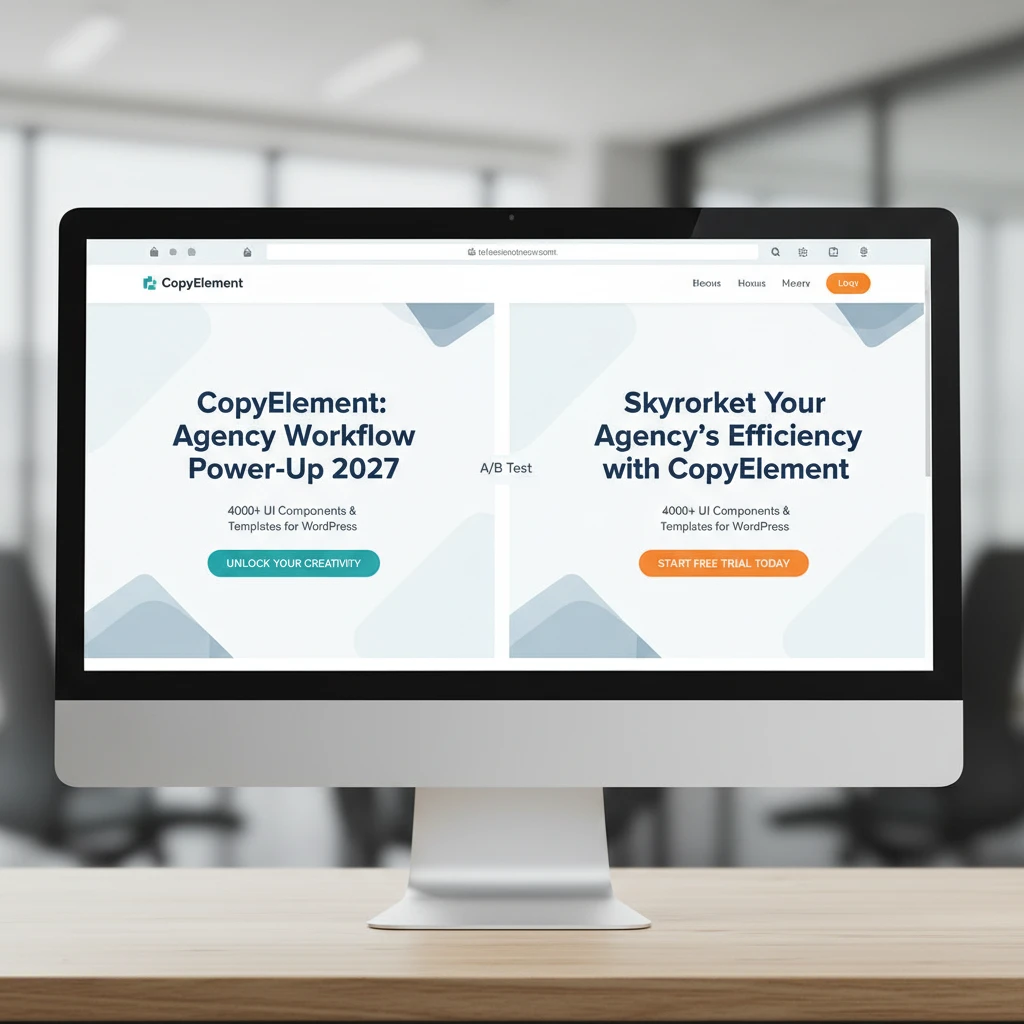
The true power of conversion optimization lies in continuous testing and refinement. Elementor, combined with CopyElement’s pre-built templates and components, provides an ideal environment for robust A/B testing strategies. Agencies can leverage CopyElement’s diverse landing page templates and individual UI blocks to create multiple variations of key page elements—such as headlines, CTAs, form fields, or hero image sections. These variations can then be implemented within Elementor’s flexible structure, making it straightforward to set up A/B tests.
For example, an agency could use two different pre-built CTA button styles from CopyElement, test them against each other on a client’s landing page, and track which performs better in terms of click-through rates and subsequent conversions. Similarly, different headline copy variations, derived from CopyElement’s text block components, can be rapidly deployed and tested. The ease with which these elements can be swapped and iterated upon means that agencies can conduct more frequent and more comprehensive A/B tests, leading to quicker identification of winning combinations. This data-driven approach ensures that landing pages are not just designed well, but are continuously optimized for maximum conversion, providing clients with tangible, measurable improvements in their marketing efforts.
Elevating UI/UX Design with Ready-Made Blocks
In the fast-paced world of digital creation, agencies and designers are constantly seeking ways to streamline their workflows without compromising on quality or innovation. CopyElement’s extensive library of ready-made UI blocks serves as a powerful catalyst for this. Instead of meticulously crafting every button, form, or card from the ground up, designers can leverage these pre-built components to accelerate the design process. This approach not only saves significant time but also ensures that the interface elements adhere to modern design principles and accessibility standards. The key benefit lies in rapid prototyping and iteration, allowing teams to visualize and test different design directions much faster than manual creation would permit. For instance, a complex user profile section that might take hours to code or design manually can be assembled in minutes using a combination of CopyElement’s pre-designed blocks. This allows designers to focus their creative energy on the more strategic aspects of user experience, such as information architecture and user flow, rather than repetitive UI element construction.
Implementing Modern UI Trends Without Starting from Scratch
Staying abreast of evolving UI trends can be a significant challenge for busy design teams. CopyElement democratizes access to contemporary design patterns, offering blocks that embody the latest aesthetic and functional advancements. This means agencies can effortlessly incorporate elements like micro-interactions, neumorphic designs, or bold typography into their projects without needing specialized, time-consuming development or design expertise. The library is regularly updated to reflect emerging trends, ensuring that your agency’s output remains fresh and competitive. For example, if glassmorphism becomes a dominant trend, CopyElement users will find pre-built components featuring this aesthetic, ready to be implemented. This saves considerable research and development time, allowing for immediate adoption of new design paradigms. The ability to quickly experiment with these trends enables teams to offer cutting-edge design solutions to clients, enhancing their brand perception and user engagement. Effectively, these blocks act as a curated showcase of current design possibilities, making innovation accessible.
Ensuring Responsiveness Across All Devices with Component Design
A critical aspect of modern web design is ensuring a seamless experience across a multitude of devices and screen sizes. CopyElement’s components are engineered with responsiveness at their core. Each block is meticulously designed and tested to adapt fluidly to desktops, tablets, and mobile phones. This eliminates the often-tedious process of manually adjusting layouts and elements for different viewports. By utilizing these inherently responsive components, designers can be confident that their websites will look and function flawlessly, regardless of how a user accesses them. This proactive approach to responsiveness not only enhances user satisfaction but also contributes positively to SEO, as search engines favor mobile-friendly websites. For agencies, this translates to fewer development hours spent on debugging responsive issues and more time dedicated to creating engaging user journeys. This principle of component-based responsiveness is fundamental to efficient and effective website development in today’s multi-device world, aligning with best practices in web accessibility and user experience.
Best Practices for Integrating CopyElement Blocks into Existing Designs
Integrating new components into an established design system requires a thoughtful approach to maintain consistency and coherence. When incorporating CopyElement blocks, it’s crucial to first understand your existing brand guidelines, color palettes, and typography. Start by inspecting the structure and styling of the CopyElement blocks to identify how they align with your current design language. Often, minor adjustments to color overlays, font families, or spacing can help them blend seamlessly. It’s also advisable to utilize the CopyElement library to build out specific sections or pages rather than attempting to replace entire existing structures at once. This allows for incremental integration and easier testing. For instance, if you need to add a new testimonial carousel, select a CopyElement block that closely matches your existing aesthetic and then tweak its colors and fonts. Consider using Elementor’s global styles features to ensure new components adopt your site’s established look and feel. This systematic method minimizes disruption and maximizes the impact of the new components, ensuring a cohesive and professional final product.
Industry-Specific Templates for Diverse Client Needs
The ability to cater to a wide array of client industries is a hallmark of a versatile agency. CopyElement’s extensive collection of industry-specific templates provides a significant advantage in this regard. Instead of beginning each project with a blank canvas, agencies can select from professionally designed layouts tailored for sectors like real estate, e-commerce, hospitality, or professional services. These templates are not mere starting points; they are meticulously crafted to incorporate elements that resonate with the target audience of each industry, incorporating common user expectations and conversion pathways. This pre-built foundation dramatically reduces initial design and development time, allowing teams to move swiftly from project kickoff to client presentation. The advantage is particularly pronounced when dealing with clients who have tight deadlines or require a robust online presence quickly. By leveraging these specialized, ready-to-deploy solutions, agencies can offer a faster time-to-market for their clients’ websites.
Quickly Launching Websites for Niche Markets (e.g., Real Estate, E-commerce, Services)
Launching websites for niche markets often requires an understanding of specific industry conventions and customer expectations. CopyElement’s industry-specific templates accelerate this process by providing pre-designed structures that are already optimized for these particular sectors. For instance, a real estate template might include integrated IDX feed compatibility placeholders, prominent property listing layouts, and agent profile sections. An e-commerce template would likely feature intuitive product catalog displays, clear calls-to-action for adding to cart, and secure checkout flow outlines. Service-based businesses benefit from templates that emphasize client testimonials, service portfolios, and easy contact forms. By starting with these tailored templates, agencies can bypass the lengthy research and design phase for common industry requirements, allowing them to deploy functional and aesthetically appropriate websites rapidly. This efficiency translates directly into quicker project completion times and increased client satisfaction, especially for businesses in fast-moving or highly competitive niches.
Customizing Industry Templates to Fit Brand Identity
While industry-specific templates provide a strong foundation, maintaining a unique brand identity is paramount for any client. CopyElement templates are designed with flexibility in mind, allowing for extensive customization to align with a client’s specific branding. Agencies can easily modify color schemes, typography, imagery, and even rearrange or swap out sections to perfectly match the client’s visual identity and messaging. This is often achieved through Elementor’s intuitive drag-and-drop interface, eliminating the need for complex coding. For example, a real estate template can be transformed to reflect a luxury brand with elegant fonts and sophisticated imagery, or a budget-friendly agency with a more vibrant and direct aesthetic. The key is to use the template as a structural guide and then apply the client’s unique brand elements. This hybrid approach of leveraging pre-built structure with custom branding ensures that the final website is both efficient to build and distinctively representative of the client’s business, fostering a stronger connection with their audience.
The ROI of Using Tailored, Professionally Designed Templates
The adoption of tailored, professionally designed templates like those offered by CopyElement delivers a tangible return on investment for agencies and their clients. By significantly reducing the time and resources required for design and development, these templates directly lower project costs. This cost efficiency allows agencies to take on more projects, improve profit margins, or offer more competitive pricing to their clients. Furthermore, professionally designed templates are built with conversion best practices in mind, leading to websites that are more effective at generating leads, sales, or inquiries. For clients, this means a faster path to achieving their online business objectives and a higher performing website. The ability to launch more polished and effective websites in less time, combined with the potential for improved conversion rates, creates a compelling case for their use. This strategic investment in efficient, conversion-focused design assets can be a significant driver of business growth for both the agency and its clientele.
Performance Optimization Built into Every Element
In the current digital landscape, website performance is not just a technical detail; it’s a critical factor influencing user experience, search engine rankings, and conversion rates. CopyElement understands this imperative and has integrated performance optimization into the very fabric of its components. Unlike bloated, feature-heavy widgets that can weigh down a website, CopyElement’s elements are crafted with efficiency in mind. This means cleaner code, reduced HTTP requests, and faster loading times. By prioritizing lean development practices, each component contributes to a smoother, faster user journey. This focus ensures that websites built using CopyElement not only look exceptional but also perform exceptionally well, providing a competitive edge for agencies and their clients in terms of user satisfaction and search visibility.
Understanding the Impact of Component Bloat vs. Optimized Code
The difference between well-optimized components and those suffering from “bloat” can have a profound impact on website performance. Bloated components often include unnecessary JavaScript, CSS, or redundant features that contribute to slower page load times and increased server strain. This can lead to higher bounce rates, lower search engine rankings, and frustrated users. CopyElement’s library is meticulously curated to avoid these pitfalls. Each component is designed to be lightweight and efficient, providing the necessary functionality without extraneous code. This means fewer assets to load, faster rendering times, and a generally snappier user experience. For example, a simple image gallery component should ideally only load the scripts and styles absolutely required for its operation, rather than a vast library of unrelated features. Prioritizing lean, functional component design is crucial for maintaining a high-performing website that keeps users engaged and search engines happy.
How CopyElement’s Performance-Focused Components Benefit SEO
Website speed is a direct ranking factor for search engines like Google. Faster websites provide a better user experience, which search engines prioritize. CopyElement’s performance-focused components directly contribute to improved SEO by ensuring that websites built with them load quickly and efficiently. This reduction in load times minimizes bounce rates – a signal to search engines that users find your site valuable. Furthermore, optimized components often lead to cleaner code, which is easier for search engine crawlers to parse and index accurately. By minimizing the overhead of complex JavaScript or heavy CSS, CopyElement helps ensure that your site’s core content is delivered rapidly to both users and search engine bots. This commitment to speedy and efficient componentry creates a strong foundation for achieving higher search engine rankings and attracting more organic traffic, supporting broader SEO strategies.
Pre-launch Performance Checklist for Elementor Websites
Before launching an Elementor-powered website that utilizes CopyElement components, a thorough performance review is essential. Begin by testing your site’s speed using tools like GTmetrix or PageSpeed Insights. Pay close attention to metrics such as Largest Contentful Paint (LCP) and First Input Delay (FID). Ensure all images are properly optimized and compressed, and that lazy loading is enabled where appropriate. Review your caching strategy; implementing effective browser and server-side caching can dramatically improve load times. Minify CSS and JavaScript files to reduce their size. If you have many plugins, audit them to remove any that are not strictly necessary, as they can also contribute to bloat. Finally, verify that all CopyElement components are loading efficiently and not causing any unexpected delays. A well-executed pre-launch performance audit ensures that your website is set up for success from day one, providing visitors with a fast and seamless experience.
Empowering Junior Designers and Developers
The learning curve for web design and development can be steep, particularly for junior professionals entering the field. CopyElement acts as an invaluable tool in bridging this gap, offering a structured and intuitive environment that accelerates learning and boosts confidence. By providing ready-made, well-architected components, junior team members can begin contributing to real projects much sooner. They gain practical experience in assembling functional and aesthetically pleasing interfaces without needing to master complex coding or design principles from scratch. This hands-on approach, combined with the ability to see how professional-grade elements are constructed and work together, fosters a deeper understanding of effective design patterns and development workflows. CopyElement’s library essentially serves as a practical, hands-on educational resource that empowers emerging talent.
Bridging the Skill Gap with Accessible Design Tools
Many aspiring designers and developers face challenges due to the complexity of professional design software and coding languages. CopyElement, integrated with Elementor, democratizes access to high-quality website creation. Its component-based approach simplifies the design process, making it more approachable for individuals with less experience. Instead of struggling with intricate CSS or JavaScript for every element, junior team members can assemble sophisticated layouts using pre-built blocks. This accessibility allows them to focus on understanding user experience principles and visual hierarchy, rather than getting bogged down in technical minutiae. The lowered barrier to entry means that more individuals can quickly gain proficiency in building modern, functional websites, effectively bridging the skill gap between theoretical knowledge and practical application in the professional world.
Learning Best Practices Through CopyElement’s Structure
Beyond simply providing ready-to-use elements, CopyElement’s library is designed with best practices embedded within its structure. When junior designers and developers work with these components, they are implicitly learning about efficient coding, responsive design, and user-centric layouts. For instance, observing how different CopyElement blocks handle responsiveness or how they are organized within a page can teach valuable lessons about building maintainable and scalable websites. The consistency in design and functionality across the library also helps users understand the importance of adhering to established patterns. This means that by using CopyElement, junior professionals are not just building websites; they are absorbing and internalizing fundamental principles of good web design and development through practical application, setting them up for long-term success in their careers.
From Novice to Professional: A Growth Path with Elementor and CopyElement
The journey from a novice to a proficient web professional is significantly smoothed by the combination of Elementor and CopyElement. For beginners, CopyElement offers an immediate ability to create impressive results, building confidence and momentum. As they become more comfortable, they can start to explore the underlying structure of the components, gaining insights into how they function and how they can be further customized. This progression allows them to gradually deepen their technical skills and design understanding. A novice might start by simply dropping pre-made sections into place, but with experience, they will learn to tweak individual elements, combine different blocks creatively, and even adapt components for unique project requirements. This curated learning path, where users are guided by high-quality examples and a user-friendly interface, provides a clear trajectory for professional growth and skill development within the WordPress and Elementor ecosystem.
Future-Proofing Your Agency’s Workflow with AI Integration
The integration of artificial intelligence (AI) is no longer a futuristic concept but a present-day necessity for agencies aiming to maintain a competitive edge. AI tools can significantly augment human capabilities, automating mundane tasks and providing data-driven insights that were previously inaccessible. For agencies leveraging platforms like Elementor, AI’s potential extends to enhancing content creation, streamlining design processes, and predicting website performance trends. By strategically implementing AI, agencies can not only boost efficiency but also deliver more sophisticated and effective solutions to their clients. Embracing AI means moving beyond manual efforts and unlocking a new era of automated, intelligent workflows that drive tangible business outcomes. This proactive adoption ensures that your agency remains agile and responsive to the evolving digital landscape.
AI’s Role in Content Generation for Websites
Content is king, but generating high-quality, SEO-optimized content at scale can be a significant bottleneck for agencies. AI-powered writing assistants are rapidly evolving, capable of drafting website copy, blog posts, product descriptions, and even social media updates with remarkable speed and coherence. These tools can analyze existing content, identify keyword opportunities, and generate variations tailored to specific audience segments. For agencies using Elementor, AI can help craft compelling landing page copy that aligns with the visual design, ensuring a unified user experience. Decision criteria for selecting AI content tools include the quality of generated text, customization options, integration with existing content management systems, and the ability to maintain brand voice. Pitfalls to avoid involve over-reliance on AI without human oversight, leading to generic or factually inaccurate content, and neglecting the importance of human creativity and nuanced storytelling. An example: An agency uses an AI tool to generate initial drafts for 50 product descriptions for an e-commerce client, saving 15 hours of writing time. The marketing team then refines these drafts, adding unique selling propositions and brand-specific language, resulting in a 30% faster content rollout. Actionable steps include experimenting with various AI writing platforms, defining clear content guidelines for AI-generated text, and establishing a review process to ensure quality and accuracy before publication.
Automating Repetitive Design Tasks
The visual aspect of web design often involves numerous repetitive tasks, from resizing images and adjusting layouts to applying consistent styling across multiple elements. AI is making inroads into automating these processes, freeing up designers to focus on more strategic and creative endeavors. AI-powered design tools can learn design patterns and preferences, suggesting optimal layouts, color palettes, and typography based on project requirements and best practices. For Elementor users, AI can assist in automatically generating responsive variations of design sections or adapting existing components to fit new content. Key decision criteria when evaluating AI design automation tools include their ability to understand project context, the intuitiveness of their interface, and the flexibility of their output. A common pitfall is the risk of AI-generated designs becoming too formulaic, lacking the unique artistic touch that differentiates a brand. For instance, an agency used an AI tool to automatically generate 10 variations of a testimonial section across different screen sizes, reducing the manual effort by 8 hours. The designers then curated the best variations and made minor adjustments for brand consistency. To implement this, agencies should identify the most time-consuming, repetitive design tasks and explore AI solutions specifically designed for those functions. Prioritize tools that offer a high degree of control and allow for human intervention and creative input, ensuring that automation enhances, rather than replaces, the designer’s vision.
Predictive Analytics for Website Performance Improvements
Understanding and improving website performance is crucial for user engagement and conversion rates. AI excels at analyzing vast datasets to identify patterns and predict future outcomes. Predictive analytics can forecast potential performance bottlenecks, suggest optimizations for loading speed, and even anticipate user behavior trends. For agencies managing multiple client websites built with Elementor, AI-powered tools can monitor site health, identify areas for improvement in SEO, and flag potential technical issues before they impact users. Decision criteria for adopting predictive analytics tools include the accuracy of their predictions, the clarity of their actionable recommendations, and their integration capabilities with existing analytics platforms. A significant pitfall is misinterpreting the data or acting on predictions without understanding the underlying context, which can lead to misguided optimization efforts. An agency noticed through predictive analytics that a specific e-commerce product page was likely to see a drop in conversion due to slow loading times during peak traffic. Following the AI’s recommendations, they optimized image compression and implemented lazy loading for non-critical elements, resulting in a 15% improvement in load speed and a 5% increase in conversions for that page. To leverage this effectively, agencies should start by defining key performance indicators (KPIs) they wish to improve and then select AI tools that can track and provide insights related to those specific metrics. Continuous monitoring and iterative adjustments based on AI-driven recommendations are essential for sustained performance gains.
Scaling Your Agency Operations Without Compromising Quality
As agencies grow, the challenge of scaling operations while maintaining the high quality of work delivered becomes paramount. This involves optimizing internal processes, managing resources effectively, and ensuring consistency across all projects. The strategic use of tools and methodologies can facilitate this growth without diluting the agency’s standards or overwhelming its team. Scaling effectively means not just taking on more clients but doing so in a way that enhances client satisfaction and profitability. It requires a systematic approach to project management, resource allocation, and quality assurance, all while fostering an environment that supports innovation and continuous improvement. The goal is to build a robust operational framework that can adapt to increasing demand without sacrificing the bespoke attention each client deserves. This foundational strength is what allows an agency to expand its reach and impact sustainably.
Managing Multiple Client Projects Simultaneously
Effectively juggling numerous client projects is a core challenge for any growing agency. This requires robust project management systems, clear communication channels, and efficient task delegation. The ability to maintain visibility across all ongoing projects, track progress, and manage deadlines is crucial. For agencies working with Elementor, adopting a centralized platform for managing components and templates, like design templates, can significantly streamline workflows and ensure consistency, even when multiple designers are involved. Decision criteria for project management tools include their ability to handle complex project dependencies, facilitate team collaboration, and provide insightful reporting on project status and resource utilization. A common pitfall is inadequate resource allocation, leading to team burnout or missed deadlines. An example: An agency adopted a new project management software and implemented strict task prioritization, enabling them to manage 15 concurrent client projects with the same team size, reducing project completion time by an average of 10% per project. Actionable steps involve defining a standardized project kickoff process, utilizing project management dashboards for real-time oversight, and establishing clear communication protocols for addressing scope changes or potential delays across multiple client engagements.
Standardizing Design and Development Processes
Consistency in design and development is key to delivering professional, high-quality websites efficiently. Standardization reduces errors, speeds up delivery times, and makes onboarding new team members much smoother. This involves creating documented workflows, style guides, and coding best practices. For agencies using Elementor, this might mean establishing a library of approved components and master templates that adhere to specific design principles and performance standards. Decision criteria for standardization include the scalability of the processes, their adaptability to different project types, and their alignment with industry best practices. A potential pitfall is creating processes that are too rigid, stifling creativity or failing to accommodate unique client needs. An agency implemented a standardized Elementor workflow, including pre-defined page structures and component usage guidelines, which led to a 20% reduction in development time for typical client projects. This also improved the consistency of their website builds. To achieve this, agencies should begin by auditing their current processes, identifying areas with significant variation or inefficiency, and then develop clear, documented guidelines and templates. Regular team training and feedback sessions are essential to ensure these standards are understood and consistently applied.
The Role of Reusable Assets in Agency Growth
Reusable assets, such as pre-designed components, templates, and code snippets, are foundational to scaling an agency’s operations without sacrificing quality. By building a robust library of these assets, agencies can significantly reduce the time spent on repetitive tasks for each new project. This not only speeds up development but also ensures a consistent brand experience and adherence to design standards across all client websites. Platforms like CopyElement offer a vast collection of pre-built Elementor sections and templates that agencies can leverage. Decision criteria for asset management include the organization and searchability of the library, the ease of customization of individual assets, and their adherence to performance and accessibility standards. A pitfall to avoid is creating an unwieldy or poorly organized asset library, which can negate its time-saving benefits. For example, an agency developed a custom library of reusable Elementor sections for common features like hero banners, testimonials, and contact forms. This resulted in an average reduction of 3-5 hours per website build, allowing them to take on 20% more projects annually. Actionable steps involve identifying the most frequently used design elements and functionalities, developing or curating high-quality, flexible assets for these elements, and establishing a clear system for cataloging and accessing these reusable components.