
In today’s fast-paced digital landscape, agencies are constantly seeking ways to enhance efficiency and deliver exceptional results without compromising quality. The website building process, in particular, presents numerous opportunities for optimization. Leveraging the right tools can transform a standard workflow into a highly effective engine for client satisfaction and project profitability.
Elementor, as a leading WordPress page builder, offers a robust ecosystem that extends far beyond basic drag-and-drop functionality. Its template system, when strategically employed, acts as a significant accelerator, empowering agencies to not only build faster but also smarter. This involves a deeper understanding of how pre-designed assets can be integrated into a cohesive and powerful workflow.
Streamlining Agency Website Builds: The Template Advantage in 2026
The year 2026 sees digital agencies operating in an environment where client expectations are higher than ever. The demand for sophisticated, high-performing, and mobile-responsive websites has become the industry standard. Agencies must adapt by adopting tools and methodologies that allow for rapid development, consistent quality, and cost-effectiveness. This is where the strategic use of Elementor templates truly shines, offering a tangible advantage in a competitive market.
The Evolving Demands on Digital Agencies
Today’s digital agencies are expected to deliver more than just aesthetically pleasing websites. Clients require solutions that are not only visually appealing but also perform exceptionally well in terms of speed, user experience (UX), and search engine optimization (SEO). The pressure to launch projects quickly, manage multiple client accounts concurrently, and maintain profitability means that efficiency is paramount. Agencies must be agile, adopting technologies that facilitate faster iteration and deployment. This includes tools that simplify complex design tasks, streamline content integration, and ensure cross-device compatibility without extensive custom coding. The ability to adapt to evolving client needs and industry trends rapidly is a key differentiator.
Why Pre-Built Solutions Are No Longer Optional
The era of building every website element from scratch is rapidly fading for most agency projects. While custom design has its place, the sheer volume and speed required in modern web development make pre-built solutions indispensable. Elementor templates offer a significant shortcut, providing professionally designed layouts and components that can be adapted to specific client requirements. This drastically reduces the time spent on foundational design and layout, allowing teams to focus on higher-value tasks like client consultation, content strategy, and performance optimization. For agencies aiming to scale their operations and take on more projects, embracing templated approaches is not just beneficial; it’s a necessity for staying competitive and profitable.
Defining ‘Agency Workflow Power-Up’
‘Agency Workflow Power-Up’ refers to the strategic integration of specialized tools and methodologies designed to amplify an agency’s efficiency, productivity, and output quality. In the context of Elementor, this means moving beyond basic page building to a more sophisticated approach where pre-designed assets, like templates and component libraries, are leveraged as foundational building blocks. It’s about creating a system where design, development, and deployment are optimized for speed and consistency. This concept encompasses not just faster builds, but also improved collaboration among team members, reduced errors, and a more predictable project lifecycle. Ultimately, it empowers agencies to deliver superior client results with greater speed and profitability.

Beyond Drag-and-Drop: Elementor Templates as Strategic Assets
Elementor templates are far more than just pre-made designs; they are strategic assets that can fundamentally reshape how an agency operates. When viewed as a core component of the workflow, they offer advantages that extend to client satisfaction, project scalability, and team skill development. This strategic perspective transforms template usage from a mere time-saving tactic into a powerful driver of business growth and operational excellence. Agencies can achieve significant improvements in project turnaround times and maintain a higher standard of quality across all their deliverables.
Accelerating Client Onboarding with Elementor Template Kits
The initial stages of any client project are critical, setting the tone for the entire engagement. Elementor template kits provide a powerful mechanism to accelerate client onboarding by offering pre-designed solutions tailored to specific industries or project types. This not only speeds up the initial design and development phases but also helps clients visualize the end product more effectively, leading to quicker approvals and a smoother overall experience. By presenting a curated selection of professional designs, agencies can demonstrate their capabilities and understanding of client needs from the outset, fostering trust and confidence.
Pre-designed Industry-Specific Solutions
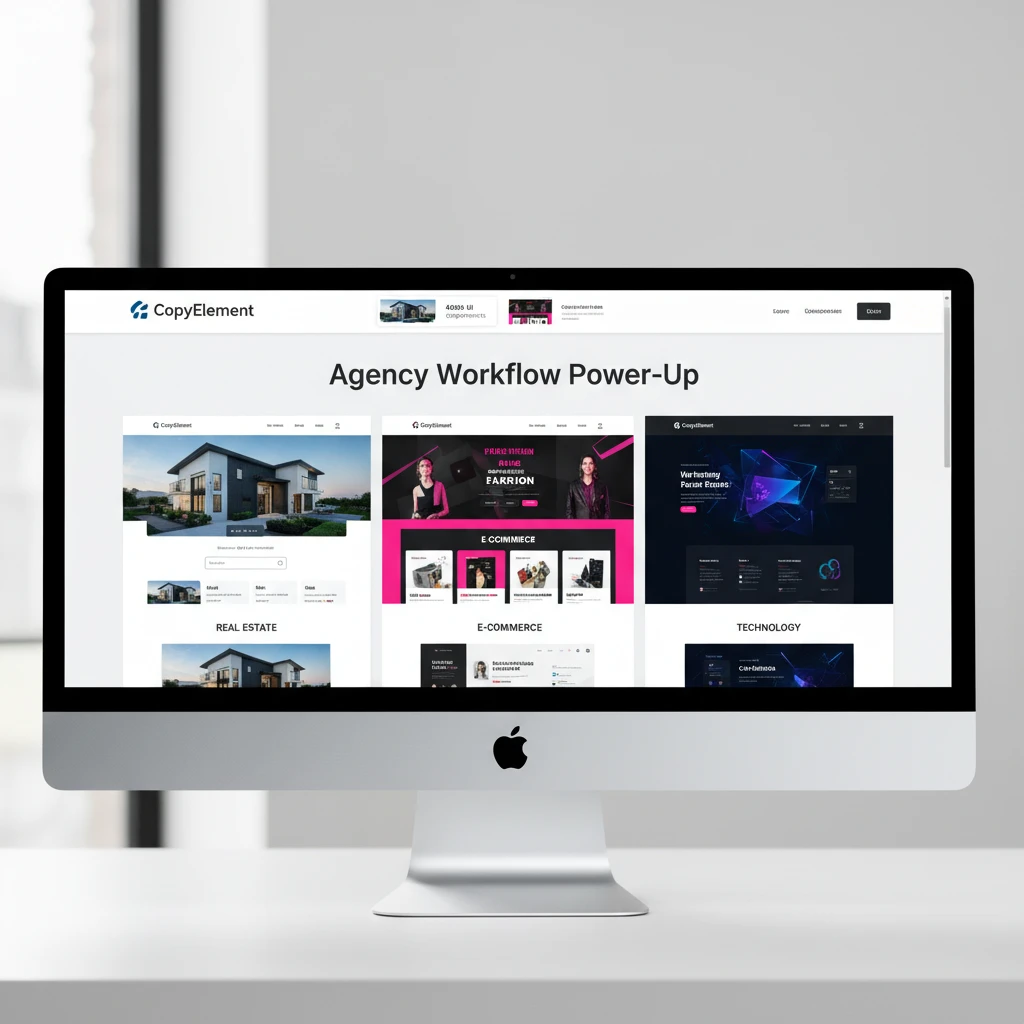
One of the most significant advantages of modern Elementor template kits lies in their industry-specific nature. Instead of starting from a blank page for every client, agencies can now access professionally designed templates tailored for sectors like e-commerce, real estate, healthcare, restaurants, and professional services. These kits often include not only page layouts but also specialized widgets and content blocks that align with the typical needs and functionalities of that industry. For example, a real estate template kit might feature property listing templates with built-in search filters, while an e-commerce kit would include product grid layouts and cart/checkout page designs. This targeted approach significantly reduces customization time and ensures that the final website is relevant and effective for the client’s business niche.
Customization Foundation vs. Blank Canvas
Choosing between a blank canvas and a pre-designed template kit presents a key strategic decision for agencies. While a blank canvas offers ultimate creative freedom, it also demands more time and resources for foundational design. Elementor template kits, conversely, provide a robust starting point. They offer a pre-built structure and aesthetic that can be extensively customized rather than built from scratch. This allows agencies to leverage professionally crafted layouts and component arrangements as a foundation, focusing their efforts on tailoring the design to the client’s unique brand identity, messaging, and specific functionality requirements. It’s about building upon a proven framework, which is inherently faster and often leads to a more polished outcome.
Rapidly Prototyping Client Vision
The ability to quickly translate a client’s vision into a tangible website prototype is a game-changer for client communication and project momentum. Elementor template kits facilitate this by providing a rich library of pre-designed sections and pages that can be rapidly assembled and modified. This allows agencies to present clients with a realistic representation of their future website within days, rather than weeks. Clients can then provide more informed feedback on layouts, features, and overall design direction, leading to fewer revisions later in the development cycle. This rapid prototyping capability not only enhances client satisfaction but also significantly reduces the risk of scope creep and miscommunication.
Ensuring Brand Consistency Across Multiple Client Projects
Maintaining a consistent brand identity across all client projects is a hallmark of professional agency work. Elementor templates, when utilized within a structured framework, can be instrumental in achieving this consistency. By establishing agency-branded templates and adhering to component-based design principles, teams can ensure that every website they deliver reflects a unified visual language, even when working with diverse clients. This not only enhances the agency’s reputation but also streamlines the design and development process, making it more efficient and less prone to errors.
Establishing Agency-Branded Template Libraries
A cornerstone of efficient and consistent web design for agencies is the creation of an in-house library of branded Elementor templates. This involves developing a collection of reusable sections, headers, footers, and even full page layouts that align with the agency’s own design aesthetic and best practices. These templates act as a starting point for all client projects, ensuring that a baseline level of quality and brand identity is established from the outset. By having these pre-approved, agency-specific components readily available, teams can significantly reduce the time spent on repetitive design tasks and ensure that every website, regardless of the client, carries a subtle yet discernible mark of the agency’s expertise. This also simplifies training for new team members, as they can quickly adopt the agency’s preferred design patterns.
Leveraging Component-Based Design Principles
Adopting component-based design principles is crucial for maintaining consistency and efficiency when building multiple websites with Elementor. This approach involves breaking down designs into smaller, reusable modules or components (e.g., buttons, cards, navigation bars, testimonials blocks). Agencies can create these components once, style them according to their standards, and then reuse them across various projects. This not only speeds up development but also makes future updates and maintenance much simpler. If a change needs to be made to a specific component’s style across multiple sites, it can often be done by updating the master component, rather than manually editing each instance. This systematic approach significantly enhances the scalability of design workflows and ensures a cohesive user experience.
Maintaining a Unified Visual Language
A unified visual language is key to building a strong and recognizable brand for your agency, even when serving diverse clients. Elementor templates and components are powerful tools for achieving this. By defining a set of brand guidelines—including color palettes, typography, spacing, and interaction patterns—and incorporating them into your custom template library, you ensure that every project reflects this cohesive aesthetic. For instance, using a consistent button style or card design across all websites can create a subtle yet impactful sense of familiarity for clients and their end-users. This strategic use of templates and components not only streamlines development but also reinforces the agency’s professional identity and commitment to quality design across all its deliverables.
Boosting Conversion Rates: Elementor Templates Engineered for Results
Elementor templates are not merely about aesthetics; they are powerful tools for driving user engagement and converting visitors into customers. The strategic placement of calls to action (CTAs), clear value propositions, and intuitive navigation are paramount. When templates are designed with conversion in mind, they guide users effortlessly through the desired journey, whether it’s making a purchase, filling out a form, or signing up for a newsletter. This focus on user behavior transforms a static website into a dynamic sales asset. Understanding the psychology behind user interaction is key to selecting or customizing templates that resonate with your target audience.
Understanding Conversion-Focused Design Elements
At the core of conversion-focused design are elements that directly influence a user’s decision-making process. Compelling headlines immediately capture attention and communicate the primary benefit. High-quality imagery and videos create emotional connections and showcase products or services effectively. Clear, concise, and benefit-driven copy educates visitors and addresses their pain points. Most critically, prominent and well-placed calls to action (CTAs) remove ambiguity and tell users exactly what to do next. Consider the psychological principles of scarcity, social proof (testimonials, reviews), and authority. For instance, a template featuring a limited-time offer banner and customer testimonials prominently displayed near the ‘Add to Cart’ button is inherently designed to boost sales. Another vital aspect is simplifying the user journey by reducing the number of steps required to achieve a goal. Minimalistic forms and straightforward checkout processes, often found in specialized landing page templates, are excellent examples of this principle in action. Exploring resources on how to craft effective landing pages can provide deeper insights into these crucial design elements.
A/B Testing Ready Layouts and CTAs
Elementor templates offer a significant advantage by providing pre-built layouts that are inherently structured for A/B testing. This means you can quickly deploy variations of your design elements to see what performs best. When selecting or customizing templates, look for those that allow for easy modification of key conversion elements such as button text, button colors, headline variations, and form field arrangements. For example, you might test two versions of a CTA button: one reading “Learn More” and another “Get Your Free Quote.” Similarly, you can test different hero section headlines or image choices. The ability to rapidly iterate on these elements without rebuilding entire pages saves considerable time and resources. Templates designed with modularity in mind make it simpler to swap out sections or individual elements, facilitating a more efficient A/B testing process. This iterative approach, powered by a flexible templating system, is crucial for continuously optimizing your website’s performance and maximizing its conversion potential. Many A/B testing tools integrate seamlessly with WordPress and Elementor, allowing for data-driven decision-making.
Integrating Lead Generation Forms Seamlessly
Effective lead generation is a cornerstone of business growth, and Elementor templates can be instrumental in streamlining this process. Integrating lead generation forms, such as contact forms, newsletter sign-ups, or quote requests, into your design should feel natural and unobtrusive. Look for templates that either include pre-designed form sections or offer ample space and styling options to accommodate your chosen form builder (e.g., WPForms, Gravity Forms, or Elementor’s built-in form widget). The goal is to make the act of submitting information as friction-free as possible. This often involves placing forms in strategic locations—like after a compelling value proposition or at the end of a service description—and ensuring the form itself is clean, easy to read, and has a clear submit button. Consider using multi-step forms for longer applications to reduce initial user overwhelm. Providing clear confirmation messages after submission also enhances the user experience and builds trust. Properly integrated forms not only capture valuable leads but also contribute to a more professional and user-friendly website.
Optimizing Development Time: From Weeks to Days with Elementor Templates
The traditional website development process can be time-consuming, often involving custom coding for every design element and page. Elementor templates fundamentally alter this paradigm, allowing agencies to drastically reduce development time. By leveraging pre-designed, customizable blocks and full-page layouts, developers can bypass the need to build common sections from scratch. This shift from bespoke creation to intelligent customization means that complex website structures can be assembled in a fraction of the time previously required. The focus moves from writing foundational code to configuring and refining existing, high-quality design assets. This efficiency gain is not just about speed; it directly impacts project timelines, client satisfaction, and agency profitability. It empowers agencies to take on more projects and deliver results faster, which is a significant competitive advantage in today’s fast-paced digital landscape. The ability to quickly prototype and present designs to clients further accelerates the feedback loop and project progression.
Reducing Repetitive Tasking in Elementor
Many website projects share common functional requirements and design patterns. Building these from scratch for every client—such as header and footer layouts, testimonial carousels, service grids, or contact forms—is highly repetitive and inefficient. Elementor templates, especially those with a rich library of pre-built components and sections like those offered by CopyElement, significantly curtail this drudgery. Instead of coding a testimonial slider, a developer can simply drag and drop a pre-designed testimonial section template and then customize the content and styling. This elimination of repetitive coding tasks is a core benefit. Furthermore, the standardization of these elements means they are often already optimized for responsiveness and performance. Agencies can maintain a library of their preferred template components, allowing for even faster assembly of new pages or entire websites. This approach not only speeds up development but also reduces the potential for errors that often creep into manually coded, repetitive elements. Exploring advanced Elementor techniques can further enhance how you utilize these components.
The Impact on Project Timelines and Budgets
The time saved through the use of Elementor templates has a direct and profound impact on project timelines and budgets. When development time is cut from weeks to days, agencies can deliver projects to clients much faster. This accelerated delivery schedule can be a significant selling point, allowing agencies to secure more clients and increase their project throughput. For clients, shorter development cycles often translate into lower overall project costs, making professional website development more accessible. This efficiency allows for more competitive pricing or the ability to offer additional value-added services within the same budget. Moreover, faster project completion means quicker revenue generation for the agency. The predictability of using established templates also helps in providing more accurate project estimates, reducing the risk of budget overruns and improving client trust. This transformation from time-intensive manual builds to template-driven customization is a key enabler of agency scalability and profitability. Resources saved can be reinvested into other crucial business areas.
Freeing Up Dev Resources for Higher-Value Tasks
By automating and simplifying the creation of standard website elements, Elementor templates liberate valuable developer time. Instead of spending hours on repetitive coding, developers can reallocate their expertise to more strategic and impactful activities. This includes focusing on complex custom functionality that templates don’t cover out-of-the-box, conducting in-depth performance optimization, implementing advanced SEO strategies, or developing unique user experiences that truly differentiate a client’s website. It also allows for more time dedicated to client consultations, understanding business requirements, and strategic planning. This shift elevates the role of developers from code assemblers to strategic problem-solvers. Agencies can leverage this freed-up capacity to innovate, experiment with new technologies, and provide more sophisticated solutions. Ultimately, this leads to higher-quality deliverables, increased client satisfaction, and a more skilled and engaged development team. The ability to tackle more challenging and rewarding tasks can significantly boost team morale and professional growth.
Future-Proofing with Performance-Optimized Elementor Templates
Website performance is no longer a secondary consideration; it’s a critical factor for user experience, SEO rankings, and conversion rates. Elementor templates, when built with performance in mind, can provide a solid foundation for fast-loading, efficient websites. The challenge often lies in understanding what constitutes a “performance-optimized” template. This involves scrutinizing the underlying code, image optimization practices, and efficient use of CSS and JavaScript. Templates that are bloated with unnecessary features or poorly optimized assets can quickly become a liability, hindering site speed and user satisfaction. Therefore, selecting templates from reputable sources that prioritize clean code and efficient architecture is crucial for future-proofing your website. By starting with a performant template, you reduce the need for extensive post-launch optimization, ensuring your site remains competitive and user-friendly in the long run.
Identifying Performance Bottlenecks in Custom Builds
When websites are built from scratch, it’s common for performance bottlenecks to emerge, often due to an accumulation of custom code, unoptimized assets, or inefficient plugin integrations. Common culprits include excessive HTTP requests, large unoptimized images, render-blocking JavaScript, and bloated CSS files. Developers might inadvertently include heavy scripts that are not essential for all pages, or database queries that are not efficiently structured. Without a performance-first mindset from the outset, these issues can become deeply embedded, making them difficult and time-consuming to resolve later. Identifying these bottlenecks requires specialized tools like Google PageSpeed Insights, GTmetrix, or browser developer tools to analyze load times, code execution, and resource loading. Understanding the root cause of slow performance is the first step towards effective optimization. Many custom-built solutions may also lack the built-in optimizations that well-designed templates incorporate.
Best Practices for Lightweight Template Architecture
The foundation of a performant Elementor template lies in its architecture. Best practices involve a minimalist approach, prioritizing essential features and clean coding. This includes leveraging optimized CSS and JavaScript, ensuring that only necessary scripts are loaded for each page. Developers should aim to minimize the number of external requests by combining files where possible and using efficient loading techniques. Image optimization is also paramount, utilizing modern formats like WebP and ensuring images are correctly sized and compressed. For templates, this means incorporating these optimizations into the core design. Another key practice is lazy loading for images and videos, which defers the loading of offscreen assets until they are needed, significantly improving initial page load times. Furthermore, well-structured templates avoid excessive use of custom CSS and JavaScript, instead relying on Elementor’s built-in features and well-coded widgets. This methodical approach ensures that the template itself doesn’t become a performance hindrance. For deeper insights into this topic, consider exploring guides on optimizing Elementor with efficient components.
Ensuring Mobile Responsiveness and Fast Load Times
In today’s mobile-first world, ensuring both impeccable responsiveness and rapid load times is non-negotiable. Elementor templates, when designed correctly, inherently address these requirements. However, it’s crucial to verify that the chosen templates have been rigorously tested across various devices and screen sizes. This means checking for seamless layout adjustments, readable typography, and functional interactive elements on smartphones, tablets, and desktops. Beyond responsiveness, optimizing images for mobile devices is critical, as bandwidth can be a constraint. Implementing techniques like responsive images that serve appropriately sized assets based on the user’s device can drastically improve load times. Furthermore, minimizing the use of heavy animations or complex scripts that might perform poorly on less powerful mobile hardware is essential. Websites that are both responsive and fast offer a superior user experience, leading to lower bounce rates and higher engagement. Testing your site on actual mobile devices is as important as using emulators.
Scaling Your Agency: How Templates Enable Growth and Efficiency
For digital agencies, scalability is key to sustainable growth. Elementor templates provide a powerful mechanism to achieve this by standardizing workflows, speeding up project delivery, and enabling teams to handle a higher volume of work efficiently. The ability to quickly deploy professional, conversion-focused websites allows agencies to take on more clients without a proportional increase in staffing or operational costs. This increased efficiency translates directly into improved profitability and the capacity to invest in further growth initiatives, such as team expansion, new service offerings, or marketing efforts. By leveraging templates, agencies can build a reputation for speed, quality, and reliability, which are essential for attracting and retaining clients. This strategic use of templating extends beyond individual projects to the overall operational framework of the agency.
Onboarding Junior Designers and Developers Faster
Elementor templates significantly simplify the onboarding process for new team members, particularly junior designers and developers. Instead of requiring extensive training on complex coding languages or proprietary frameworks, new hires can quickly become productive by learning to work within the Elementor ecosystem and understanding how to utilize pre-built templates. This means they can start contributing to client projects much sooner, reducing the ramp-up time and associated training costs. Templates provide a structured and predictable environment, offering clear guidelines on design patterns and functional components. This allows junior team members to build confidence and practical skills by working with proven, high-quality assets. Their learning curve is focused on customization and application rather than foundational creation, enabling them to deliver client-ready work faster. This accessibility democratizes website creation within the agency.
Standardizing Quality and Deliverables
Consistency in quality is crucial for any reputable agency. Elementor templates, especially those curated from reliable sources like CopyElement, inherently promote standardization. By using a consistent set of templates and components, agencies can ensure that every project, regardless of who builds it, meets a certain level of design polish, functionality, and responsiveness. This standardization of deliverables helps in building client trust and reduces the risk of subpar work slipping through the cracks. It creates a unified brand identity for the agency’s output. Furthermore, having a standardized approach makes it easier to implement quality assurance checks and streamline the review process. When everyone on the team is working with the same building blocks, it simplifies communication and collaboration, leading to more consistent and reliable outcomes across all projects.
Handling a Higher Volume of Projects
The efficiency gains derived from using Elementor templates directly enable agencies to scale their operations and handle a greater volume of projects. With development times reduced and the onboarding process streamlined, an agency can effectively manage more concurrent projects without compromising on quality or deadlines. This capacity increase is fundamental for growth. For instance, an agency that previously took four weeks to build a standard business website might now complete it in one week using templates. This allows them to potentially take on three additional projects within the same timeframe. This boost in productivity not only increases revenue potential but also allows the agency to serve a broader client base, including small to medium-sized businesses that may have tighter budgets and timelines. Ultimately, this templating strategy empowers agencies to grow their market share and become more competitive.
Avoiding Common Pitfalls When Implementing Elementor Templates
While Elementor templates offer a significant boost to agency workflows, their implementation isn’t without potential hazards. Navigating these pitfalls ensures that the promised efficiency gains are realized rather than devolving into new sources of frustration. The key lies in a balanced approach, combining the power of pre-designed assets with the necessity of thoughtful customization and rigorous testing. Understanding where these challenges typically arise is the first step to preempting them, allowing teams to harness the full potential of these powerful tools. Agencies often find that the allure of rapid development can sometimes overshadow crucial best practices, leading to suboptimal results that require extensive rework later on. This section will explore common mistakes and provide actionable advice to steer clear of them, ensuring that every template integration contributes positively to project velocity and final website quality.
The Temptation of Over-Customization
One of the most frequent missteps agencies encounter is the temptation to over-customize every element of a template. While templates provide an excellent starting point, they are not intended to be rigid blueprints. However, the desire to make a website uniquely yours can lead to excessive modifications. This often involves altering layouts beyond recognition, changing typography globally when only a few specific instances require adjustment, or adding bespoke styling to nearly every widget. Such deep-diving into customization can negate the time-saving benefits of using a template in the first place. Furthermore, it can introduce inconsistencies in design and user experience if not managed meticulously. A good rule of thumb is to identify the core purpose of the template and ask if the proposed customization truly enhances its functionality or brand alignment. If the changes are minor, focus on what truly matters for the client’s goals. Remember, the goal is to accelerate development, not to reinvent the wheel for every project. Instead of tweaking every minor detail, consider if the template’s original design, with slight color or font adjustments, already serves the purpose effectively. This selective approach ensures that the agency can still benefit from the template’s structure and pre-built responsiveness without getting bogged down in unnecessary minutiae. This approach is vital for maintaining a consistent and efficient design system across multiple projects.
Ignoring Template Structure and Code Bloat
Templates, especially those from third-party sources, can sometimes come with a substantial amount of underlying code and unnecessary styling. When agencies import these templates without scrutinizing their structure, they risk introducing code bloat to their websites. This can manifest as excessive HTML elements, redundant CSS rules, or JavaScript that isn’t optimized for performance. Over time, this bloat can significantly slow down website loading speeds, negatively impacting user experience and SEO. A common example is a template that includes styles for elements never used on the page, or complex nesting of divs that could be simplified. To avoid this, it’s crucial to perform a thorough review of the template’s structure before extensive customization. Utilize browser developer tools to inspect the code and identify any elements or styles that are not actively being used. Look for opportunities to streamline the HTML and remove unnecessary CSS. Many templates are built with a wide range of potential use cases in mind, leading them to include more features than a specific project might require. Prioritize templates that are known for their clean code or performance optimization. Regularly auditing your website’s codebase for bloat is a good practice, especially when integrating new templates or components.
Failing to Test Thoroughly Post-Implementation
After implementing an Elementor template, a common oversight is inadequate post-implementation testing. Agencies might assume that because the template worked out-of-the-box, it will continue to function flawlessly after modifications. However, even minor adjustments can have ripple effects. Key areas to focus on include responsiveness across all devices, cross-browser compatibility, and the functionality of interactive elements like forms, buttons, and animations. A template that looks perfect on a desktop might break on a tablet or mobile, or behave unexpectedly in different browsers like Chrome versus Firefox. Thorough testing involves not just visual checks but also interactive testing to ensure all user flows are smooth and intuitive. This includes checking loading speeds, ensuring accessibility standards are met, and verifying that any custom integrations (like contact forms or e-commerce widgets) are working correctly. A client experiencing a broken form or a poorly rendered page on their preferred device can quickly erode trust and damage the agency’s reputation. Implementing a systematic testing checklist for every template integration is paramount to catch these issues before they impact end-users. This diligence is essential for delivering high-quality, robust websites that perform as expected.
Integrating Custom Elements and Widgets into Template Workflows
While pre-built Elementor templates offer a fantastic foundation, agencies often need to go beyond standard offerings to meet unique client requirements or brand identities. This is where the seamless integration of custom elements and widgets becomes a critical skill. It’s not just about adding new pieces; it’s about ensuring they function harmoniously with the chosen template’s structure and design language. This process involves either developing custom widgets from scratch or intelligently adapting existing ones. For example, a client might require a highly specific testimonial slider with unique transition effects, or a custom product display grid for an e-commerce site. The key decision criteria here revolve around scalability, maintainability, and performance. A well-integrated custom element should feel like a natural extension of the template, not an afterthought. Consider the long-term implications: will this custom widget be easy for the client to manage or update? Does its code contribute to site speed, or does it add unnecessary bloat? A practical approach involves creating a library of reusable custom elements that can be deployed across multiple projects, further enhancing workflow efficiency. This strategic integration ensures that the agency can deliver bespoke solutions while still leveraging the foundational speed and consistency provided by Elementor templates. This mindful approach ensures that customization enhances rather than hinders the overall website development process, making it a powerful differentiator for agencies.
The Role of AI in Enhancing Elementor Template Utilization for Agencies
The advent of artificial intelligence presents a transformative opportunity for agencies looking to maximize their use of Elementor templates. AI tools can automate repetitive tasks, provide intelligent design suggestions, and even assist in content generation, thereby significantly amplifying the efficiency of template-based workflows. One of the most impactful applications is in content population and optimization. AI can generate placeholder text that is contextually relevant to the template’s design, or even draft initial marketing copy tailored to specific industries. Furthermore, AI-powered tools can analyze existing website content and suggest improvements for SEO, ensuring that template-based sites are not just visually appealing but also perform well in search rankings. Another area where AI shines is in design assistance. AI can analyze template usage patterns and suggest alternative layouts or component combinations that have proven effective for similar projects, aiding in rapid prototyping. For instance, an AI might recommend a particular arrangement of testimonial blocks and call-to-action buttons within a landing page template based on historical conversion data. The ability of AI to rapidly process and analyze vast amounts of data allows agencies to make more informed decisions about template selection and customization, moving beyond intuition to data-driven design. This synergy between intelligent automation and structured templates paves the way for unprecedented efficiency and effectiveness in website development.